
Learn Engineering
by Actually Experimenting.
An Open-Access Virtual Engineering Experimentation Ecosystem
Created by GARRF to help students learn, investigate, simulate, test and innovate without the traditional barriers of laboratory access and research funding.
From Zero Funding to Zero Barriers
Students should not have to wait for expensive laboratories, institutional approvals or large research grants to begin learning how engineering systems actually work.
What is the Kalam Research Zero Funding Lab?
A new model for engineering education and research: experiment first, learn deeply and innovate freely. Through interactive virtual experiments, students can observe, calculate, modify parameters, test hypotheses and develop engineering intuition. Virtual experimentation complements — not replaces — real-world laboratory education.
CONCEPT → EXPERIMENT → SIMULATION → DESIGN → PROTOTYPE → INNOVATION
Our Long-Term Vision
Dream come true 'Moment' with Honorable Dr. APJ Abdul Kalam
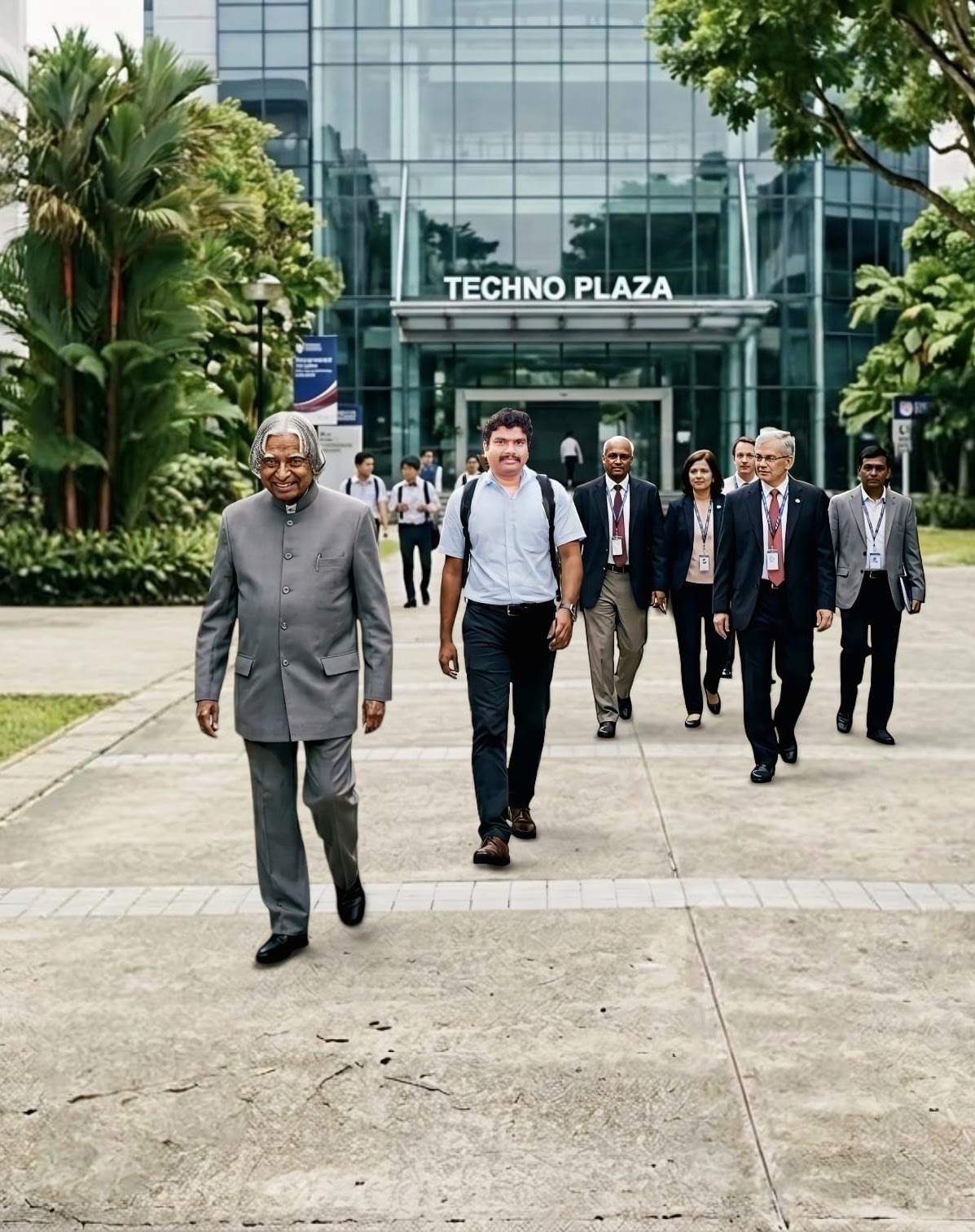
Walking behind Dr. APJ Abdul Kalam outside Techno Plaza, NTU Singapore.
🔍 Click to enlarge & read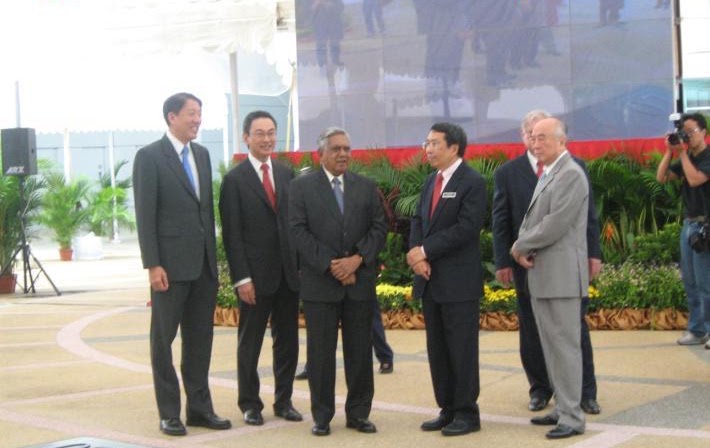
President Mr. S R Nathan, Cabinet Ministers, and NTU Leadership.
🔍 Click to enlarge & read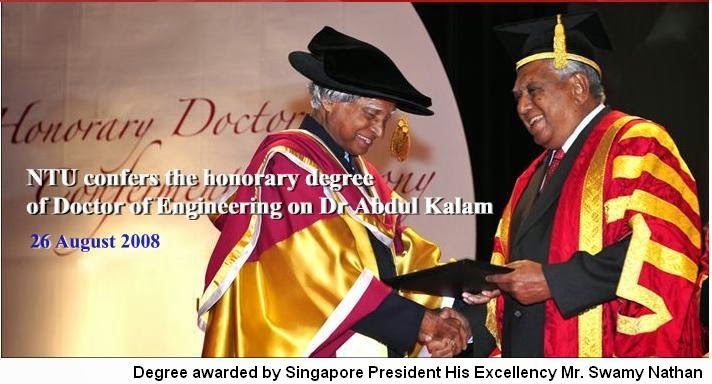
Singapore President Mr. S R Nathan confers Doctorate on Dr. Kalam.
🔍 Click to enlarge & read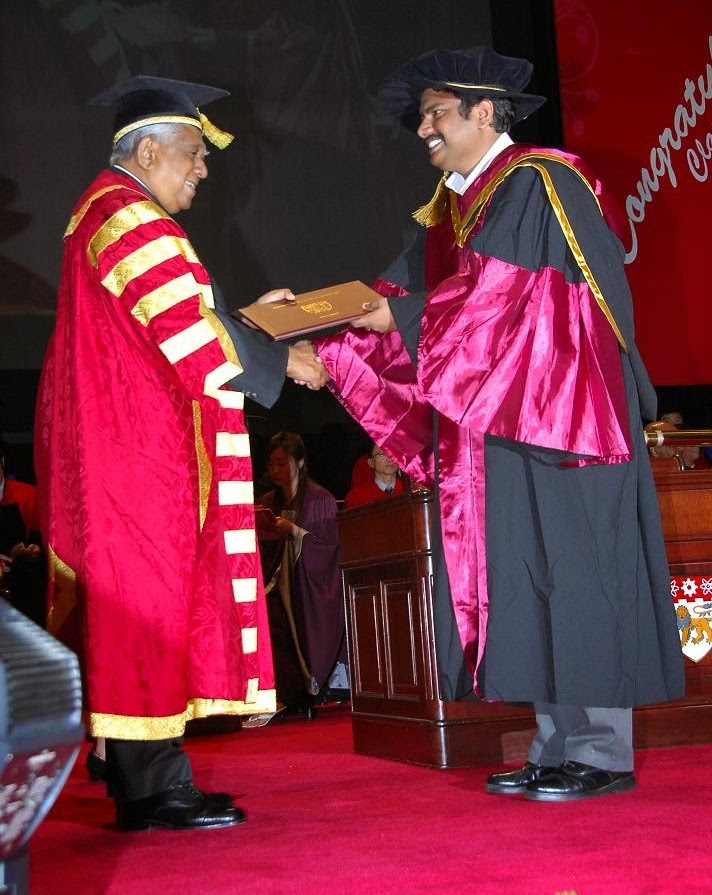
Presidential felicitation and degree certificate presentation.
🔍 Click to enlarge & read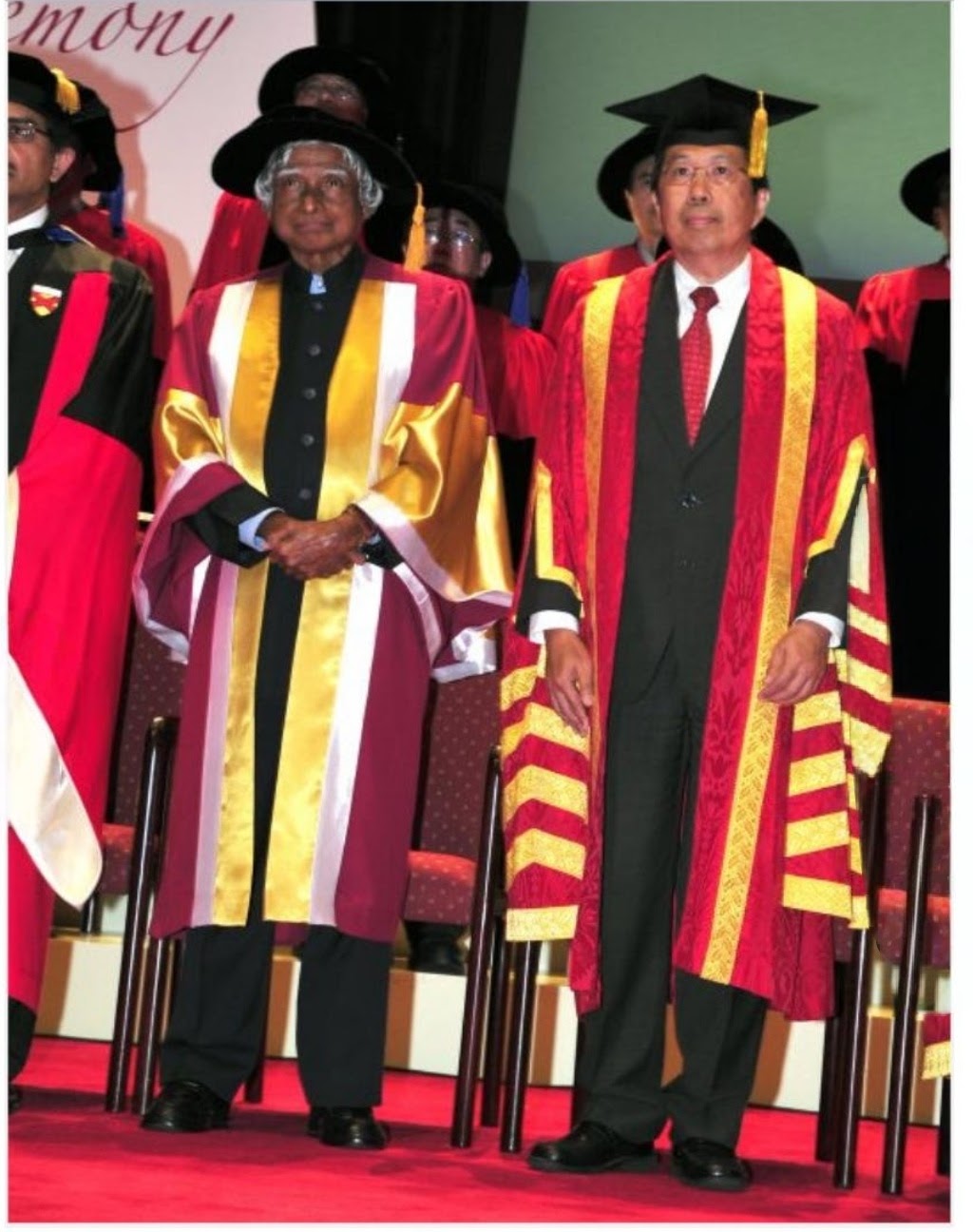
Dr. Kalam in ceremonial robes standing alongside NTU President.
🔍 Click to enlarge & read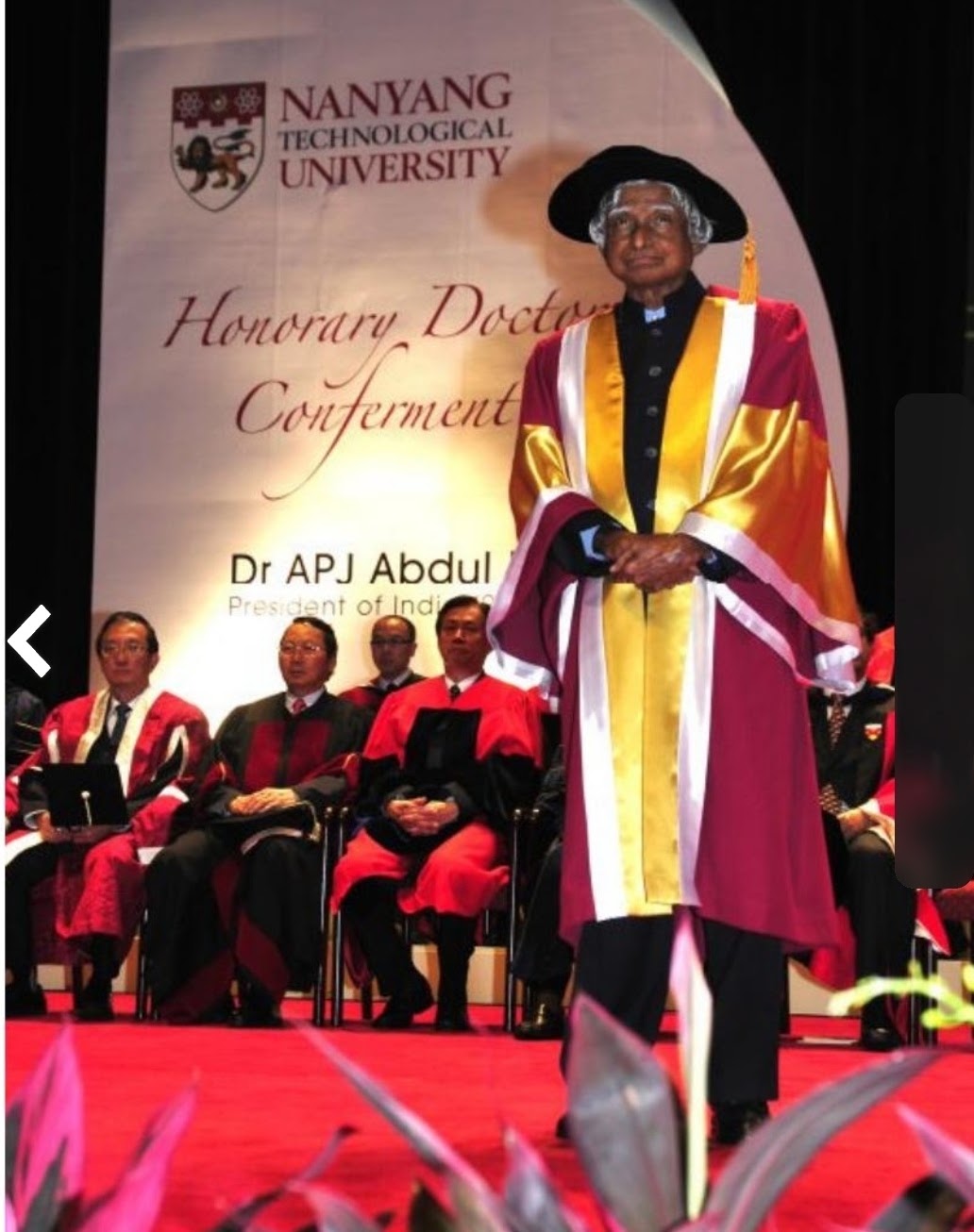
Dr. Kalam addressing the students and faculty of NTU Singapore.
🔍 Click to enlarge & readPhoto Title
Story description will appear here.
This is more than a conventional laboratory centre. It is a joint GARRF–University initiative designed to bring virtual laboratories, AI Teachers, Robotics, engineering projects and industry-oriented learning together at the institution, with the objective of taking students one step closer to jobs and placements.
Virtual Engineering Labs
Choose the laboratory you need and contact Prakruthi, our AI assistant, for a free password to access these experiments. Click 'More Experiments ▼' under any lab column to see the full suite of interactive experiments and simulations.
🏗️ Civil Virtual Laboratories
Structures, stress-strain, bridge engineering, trusses and advanced structural analysis. Get Free password from Founder by contacting Prakruthi, AI Assistant.
⚡ Electronics Laboratory
Circuits, digital logic, semiconductor devices and electronic systems through interactive learning.
🤖 Robotics & Automation
Industrial Robots, Autonomous steering, path planning, PID control, Arduino robotics and intelligent machine concepts. Humanoid research simulators included.
📡 PZT Structural Health Monitoring
Piezoelectric sensing, electromechanical impedance, vibration, signal analysis and intelligent inspection.
🔩 Mechanical & Aerospace Engineering
Study machines and mechanisms involving force and movement, materials science, testing, mechanics and engineering design.
⚛️ Quantum AI
Introduced World's First QUANTUM AI in Research: EMI (PZT/Smart Materials), EMR for Plasmons, and hybrid quantum-classical solvers.
🔬 Semiconductor Technology
Semiconductor physics, microchip fabrication workflows, cleanroom protocols, and integrated circuit design (Dedicated to Viksit Bharat 2047).
🛰️ Satellite Technology
Orbital mechanics, CubeSat system design, telemetry, ground station communication, and remote sensing payload simulation.
🚁 Drone Technology
UAV dynamics, flight stabilization, telemetry analysis, autonomous navigation, and aerial payload experimentation at GARRF Flying Virtual Club.
🎓 Master of Engineering
Postgraduate-level multi-physics modeling, advanced structural analysis, system identification, and research-grade simulation frameworks.
📱 Crops & Yield
The backbone of Rural economy is agriculture, every engineer of bharat must have some basic knowledge of rural world.
Specialised Program for M.E. / M.Tech
Mechanical • Civil • Aerospace
A specialised Structural Health Monitoring learning environment bringing together PZT sensors, EMI, vibration, signal analysis, FFT, damage detection, NDT concepts and AI-assisted engineering learning.
This suite is designed to take students beyond individual experiments toward postgraduate-level engineering reasoning and research via AI Teaching (24/7 Availability)
SHM Structural Health Monitoring
Understand piezoelectric transducers, excitation and sensing.
Explore electromechanical impedance signatures and material/structural changes.
Understand structural wave propagation and interaction with defects.
Move from time-domain signals to frequency-domain engineering interpretation.
Compare healthy and damaged structural conditions and identify changes.
Connect virtual experiments with non-destructive testing and research concepts.
Meet the AI Teachers
AI Teachers extend the virtual laboratory ecosystem by guiding students through specialised engineering learning and experimentation.
Prof. Manohar
Specialist in Structures, EMI & Structural Health MonitoringLead AI Teacher mentoring postgraduate and doctoral researchers in piezoelectric sensing (PZT), electromechanical impedance (EMI), Lamb wave propagation, and frequency-domain damage detection. Prof. Manohar guides students step-by-step through interactive virtual lab experiments with rigorous mathematical analysis.
SitaRam AI
GARRF Master Adviser supporting knowledge discovery, research guidance and ecosystem navigation.
Prakruthi
GARRF AI Assistant for students, faculty, admissions, industry partners and free lab passwords.
Chamundi
AI Teacher for Electronics and Robotics, guiding students through virtual experiments and circuits.
Chitti
Robotics Voice AI Teacher supporting robotics learning, PID experimentation and intelligent robotics.
Godavari
AI Teaching support for Civil Engineering, including beam deflections and structural learning.
ARJUN
GARRF AI EMI & PZT Signal Analyzer dedicated to electromechanical impedance and SHM research.
VIRUDH
AI Defective Digital Twin and visual inspection direction for structural damage research.
AI Maa
Student Project Assistant supporting structured long-duration engineering and research projects.
Prof. Ananth
Member of the Masters SHM teaching team, supporting advanced postgraduate engineering learnin.
Prof. Chandra
Member of the Masters SHM teaching team, supporting engineering interpretation and research learning.
Prof. Nanjunda
Member of the Masters SHM teaching team, supporting structural monitoring and experimentation.
GARRF's AI-assisted learning model is designed to support both structured laboratory teaching and interactive student exploration, keeping the learner actively engaged with live parameters.
How Students Can Use the Lab
You do not need to know everything before you begin.
Choose
Select the engineering laboratory or specialised programme you need.
Learn
Read the objective, theory, components and instructions.
Experiment
Change parameters, observe results and test your understanding.
Innovate
Ask new questions, modify experiments and develop your own ideas.
Academic Depth + Industry Experience
GARRF brings together academic knowledge, engineering research, project management, international experience and a global academic-industry network.
Dr. Venu Gopal Madhav Annamdas
Founder & Joint CEO, GARRF
Researcher, educator and engineering professional with more than two decades of international experience, combining academic research with industry-oriented engineering and project management.
Academic–Industry Network
GARRF has the support and participation of people associated with 30 global institutions, strengthening its academic, research and industry ecosystem.
GARRF is a Section 8 non-profit organisation working across research, education, innovation and rural development
The Foundation connects advanced academic learning with practical engineering, project work, industry exposure and student innovation
VIEW GARRF ADVISORY NETWORK →Curiosity Does Not Need a Grant.
Early experimentation should not be stopped simply because a student does not have access to expensive equipment or research funding. Virtual experimentation can provide the first step toward deeper research, physical prototyping and innovation.
START EXPERIMENTING →